
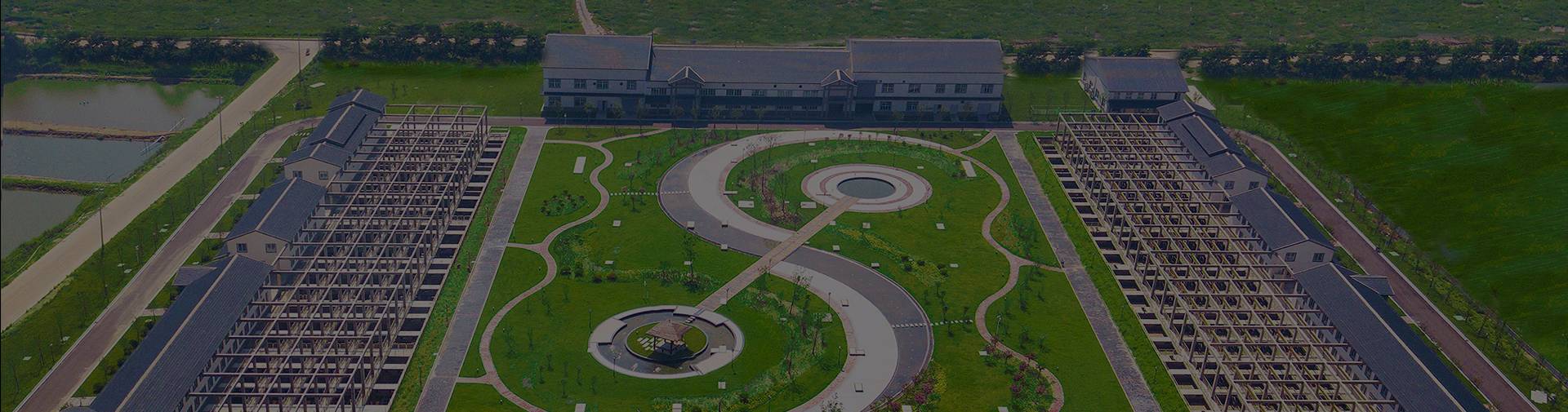
Location::Town of Plymouth, USA
Time:2019
Treatment Capacity:19 m³/d
WWTP Type: Integrated FMBR Equipment WWTPs
Process: Raw Wastewater→ Pretreatment→ FMBR→ Effluent
Video:
Project Brief:
In March 2018, Massachusetts, recognized as a global clean energy hub, launched a global search for cutting-edge wastewater treatment technologies to reduce energy consumption. This initiative, led by the Massachusetts Clean Energy Center (MASSCEC), aimed to pilot innovative technologies in public or authorized wastewater treatment facilities across the state.


The Massachusetts State Environmental Protection Agency organized a rigorous, year-long assessment of energy benchmarks, reduction targets, engineering plans, and standards for submitted wastewater treatment technologies. In March 2019, the Massachusetts government selected Jiangxi JDL Environmental Protection Co., Ltd.'s 'FMBR Technology,' awarding it the highest funding of $150,000. A pilot project will be conducted at the Plymouth Airport Wastewater Treatment Plant in Massachusetts.
The effluent treated by FMBR equipment is generally stable since the operation of the project, and the average value of each index is better than the local discharge standard (BOD≤30mg/L, TN≤10mg/L).
The average removal rate of each index is as follows:
COD: 97%
Ammonia nitrogen: 98.7%
Total nitrogen: 93%
Location::University of Massachusetts Amherst Water and Energy (WET) Testing Center
Time:2024
Treatment Capacity:25 m³/d
WWTP Type: Integrated FMBR Equipment WWTPs
Process: Raw Wastewater→ FMBR→ Effluent
Video:
Project Brief:
JDL is conducting a pilot project using FMBR technology at the University of Massachusetts Amherst's Water and Energy Technology (WET) Testing Center, located at 240 Mullins Way, Amherst, MA. The pilot aims to demonstrate that FMBR technology can achieve high biological nutrient removal (BNR) performance for domestic sewage treatment.


The pilot project uses packaged FMBR equipment with a design capacity of 6,600 GPD. Influent is sourced from the nearby Town of Amherst Wastewater Treatment Plant (TOA WWTP), and treated effluent is returned to the TOA WWTP's primary clarifier tank. The pilot monitors BOD₅, COD, ammonia, total nitrogen, and total phosphorus. Starting on April 22nd, 2024, the pilot will run for 6 months (3 months in summer and 3 months in winter). On May 2nd, 2024, JDL hired UMass WET staff to conduct third-party measurements of total nitrogen (TN), ammonia (NH₄), and chemical oxygen demand (COD).
The average removal rate of each index is as follows:
COD: 93.6%
Ammonia nitrogen: 99.5%
Total nitrogen: 91.1%

Location: Lianyungang City, China
Time: 2019
Treatment Capacity: 130,000 m3/d
WWTP Type: Facility Type FMBR WWTP
Video:
Project Brief:
In order to protect the local ecological environment and highlight the appearance of a livable and industrial coastal city, the local government chosed FMBR technology to build a park-style ecological sewage treatment plant.
Unlike traditional sewage treatment technologies with large footprints, strong odors, and above-ground structures, the FMBR plant embraces an 'above-ground park, underground sewage treatment' design. By eliminating the need for primary sedimentation, anaerobic, anoxic, aerobic, and secondary sedimentation tanks, the FMBR process simplifies treatment and significantly reduces the footprint. The entire facility is hidden underground, and treated sewage, after passing through pretreatment, FMBR, and disinfection zones, can be reused for plant irrigation and landscaping. With minimal residual sludge and virtually no odor, the plant is environmentally friendly and has been transformed into a waterscape leisure plaza, offering a new model for ecologically harmonious sewage treatment and reclaimed water reuse.
Location: Nanchang City, China
Time: 2020
Treatment Capacity: 10,000 m³/d
WWTP Type:Facility Type FMBR WWTP
Video:
Project Brief:
To address environmental issues from domestic sewage and improve urban water quality, while overcoming the drawbacks of traditional sewage plants—large land use, heavy odor, distance from residential areas, and high pipe network investment—the local government selected JDL's FMBR technology. Adopting the 'Park aboveground, treatment facilities underground' concept, a new ecological sewage treatment plant with a daily capacity of 10,000 m³ was constructed near residential areas, covering only 6,667 m². The plant operates with minimal odor and reduced organic sludge, with all treatment facilities hidden underground. Aboveground, the site is transformed into a modern Chinese garden, offering a harmonious ecological leisure space for the community.


Location: Huizhou City, China
Treatment Capacity: 20,000 m3/d
WWTP Type: Integrated FMBR Equipment WWTPs
Process: Raw Wastewater→ Pretreatment→ FMBR→ Effluent
Project Brief:
The Coastal Park FMBR Sewage Treatment Plant (STP) in Huizhou City is designed to treat 20,000 m³/day of domestic wastewater. The plant's main structures include an intake tank, screen tank, equalization tank, FMBR equipment, effluent tank, and measuring tank. Wastewater is collected from the coastal park, wharfs, Dragon Bay, and nearby residential areas. Located seaside and close to residential zones, the WWTP features a small footprint, minimal sludge discharge, and odor-free daily operation, ensuring no impact on the surrounding environment.